


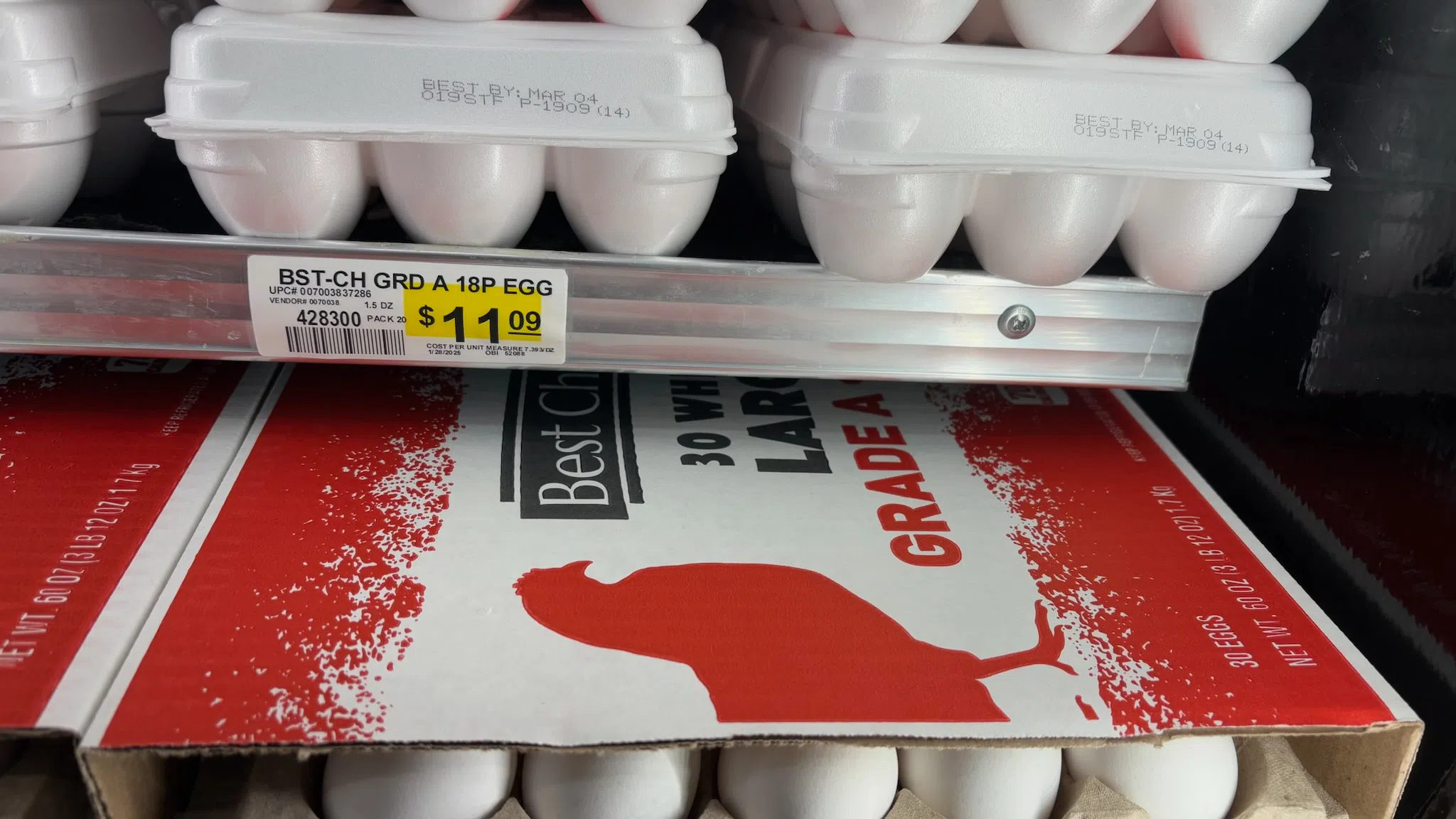
Those higher food prices you’re seeing in several categories — eggs, poultry and meat — have several overlapping factors, according to Lyon County Extension Ag Agent Brian Rees.
For eggs and poultry, a big player is the avian influenza epidemic causing producers to euthanize their stock, thus reducing the number of birds available for production for months at best. For beef, it’s another factor — extended drought. Rees says that has led to smaller herd sizes, which do not appear to be resetting any time soon.
Federal policy measures may well have an impact as well. Rees says the recent deportation of undocumented migrants is a sensitive topic, but it could have a significant ripple through fruit and vegetable prices.
Rees expects labor shortages to develop, meaning some crops may not be harvested — especially in states like California, Florida and Texas.
In another move that could well affect prices for food and other items, President Donald Trump enacted 10 percent tariffs on China, which retaliated with 15 percent duties on US coal and liquefied natural gas, as well as 10 percent tariffs on crude oil, agricultural machinery products and pickup trucks.
Plans for 25-percent tariff rates on Canadian and Mexican products have been “paused for a month” as part of separate agreements for those countries to bring 10,000 soldiers to their respective US borders. With the Mexico deal, the US says it it will work to stop “high-powered weapons” from going south.
Canada, China and Mexico are the United States’ top three trading partners. The US Census Bureau says Mexico accounts for almost 16 percent of US trade, while China accounts for almost 14 percent and Canada accounts for almost 13 percent.