

The pace has not slowed at the state level as the 2025 legislative session continues; if anything, it has only become faster and more furious.
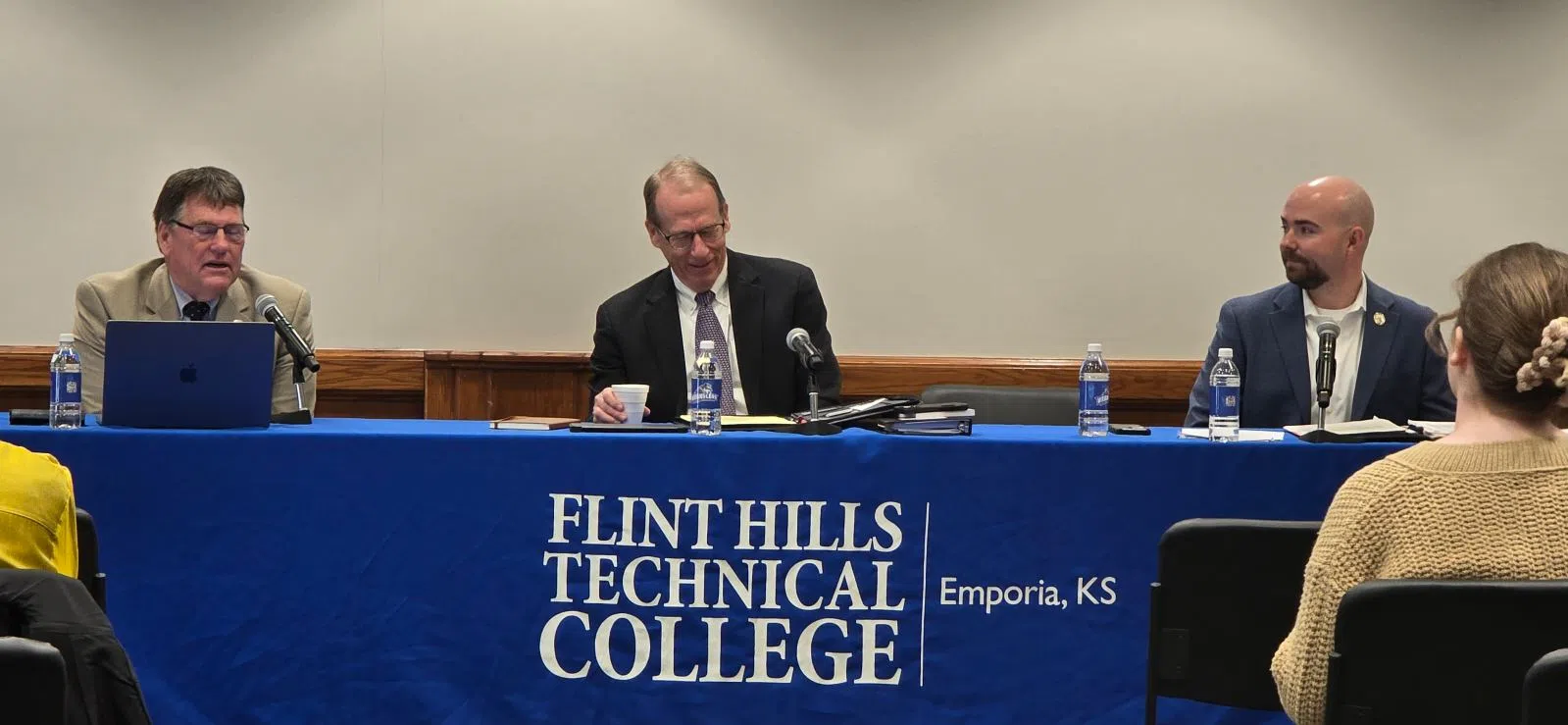
That was a consensus amongst local lawmakers in attendance for the second legislative dialogue organized by the Emporia Area Chamber of Commerce Government Matters Committee and League of Women Voters inside of the Flint Hills Technical College main campus Saturday morning. Among them was first-year 17th District Senator Mike Argabright of Olpe, who says the quick pace has been a bit too fast for his liking when it comes to the budget.
60th District Representative Mark Schreiber of Emporia says this continues to be the fastest session he can remember.
76th District Representative Brad Barrett of Osage City, who like Argabright, is in the midst of his first session, says the introduction of Senate bills to the House in recent weeks has only added to the quick pace.
Over the past several weeks, several controversial and hotly contested pieces of legislation have come before both chambers, including Senate Bill 4, which seeks to remove the three-day grace period for mail ballot submission, making 7 pm on election night the deadline for those to be returned. Argabright and Barrett are both in favor of the legislation, with Argabright saying the issue for him comes down to “mail delivery” as the main factor.
Barrett says he sees both sides of the argument; however, recent events with advance ballots, namely some being incorrectly postmarked, heavily influenced his stance on the matter.
Schreiber, however, is opposed to the bill, saying that while there are concerns, the grace period is necessary for some Kansans who tend to wait until the last moment to complete their ballots.
Another item that has been highly contested as of late and was the subject of more than one question from Saturday’s audience is Senate Resolution 1611, which seeks to remove the longstanding process of appointing Supreme Court Justices by merit and replacing it with a popular vote like all other public offices. Both Argabright and Schreiber stated they are opposed to the resolution, with Schreiber saying one of his main concerns is the politicizing of the judicial process.
Argabright echoed Schreiber’s concerns, saying a lot more information and work is needed before he can consider supporting the legislation.
Barrett, on the other hand, supports the resolution, saying he believes the change in procedure would give more say to Kansans.
13th District Representative Duane Droge did not attend Saturday’s dialogue. This is the second of three dialogues scheduled for the legislative session with a date for the third and final yet to be set.