

Earlier this week, Kansas Governor Laura Kelly updated the state’s drought alert map, elevating Lyon, Chase and Greenwood counties from drought watch to drought warning.
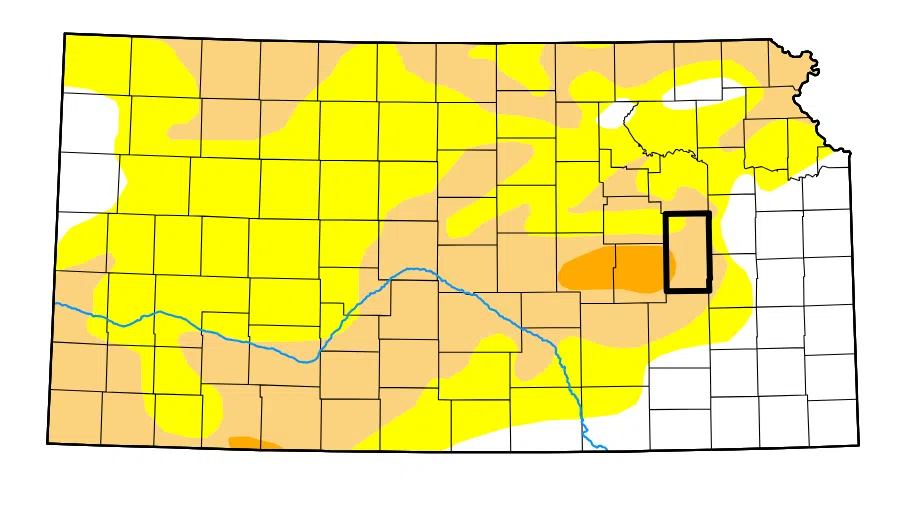
There were no changes to the US Drought Monitor’s weekly update map as revealed Thursday.
Severe drought remains in place in far west Lyon County, the northern 80 percent of Chase County and most of Marion County. Moderate drought and abnormally dry conditions cover almost the rest of the KVOE listening area, with central and eastern Osage County currently drought-free.
National Weather Service meteorologist Nathan Griesemer, a recent guest on KVOE’s Talk of Emporia, says things aren’t great now — but they could have worse if it hadn’t been for a rather wet winter.
Griesemer says there are several atmospheric conditions that lead to drought, including the amount and timing of rainfall, temperatures and wind speeds. Climate patterns such as El Nino and La Nina, or warmer- and cooler-than-normal surface waters in the central Pacific Ocean, also play a general role, with El Nino bringing dry weather to the northern half of the United States and La Nina bringing more unsettled weather.
State officials are concerned about the prolonged effects of drought offsetting recent rainfall, especially because spring is typically the wettest part of the year and summer is the driest. Kelly is asking residents across Kansas to at least consider water usage — avoiding any guidance to conserve at this time — and also to take extra care to avoid wildfires.