


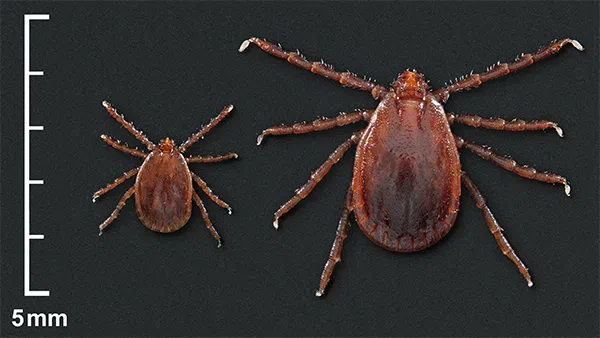
Ag officials in Kansas are warning ranchers about a dangerous tick-borne illness impacting cattle.
Theileria orientalis ikeda is carried by the Asian Longhorned tick. Kansas Veterinary Diagnostic Laboratory Associate Director Dr Greg Hanzlicek says the illness resembles another, more familiar illness to the Kansas cattle industry.
One significant difference between thyleria and anaplasmosis: thyleria can be seen in calves.
Even though the tick is the primary means of spreading the illness, Hanzlicek says producers need to be careful they don’t unwittingly spread the disease.
Being a protozoa as opposed to a bacteria or virus, Hanzlicek says antibiotics don’t work well against thyleria so the best course of action is to let the disease run its course.
Theileria was first detected in 2017. In Kansas, Hanzlicek says the pathogen has been confirmed in nearly 10 herds, with most in east Kansas — although locations have not been specified. All the affected cattle were purchased east of Kansas and then brought to the state. Hanzlicek says theileria and the Asian Longhorned tick are native to China, Japan and Russia, first being noticed in New Jersey and then moving westward. While the disease is in Kansas, the tick has not been confirmed in the state yet although it has been confirmed in Arkansas, Missouri and Oklahoma.
The Asian Longhorned tick is getting attention for its impacts on cattle, but it can also be responsible for several illnesses affecting humans, including thrombocytopenia syndrome, a potentially fatal hemorrhagic fever; and Japanese spotted fever, which is typically not life-threatening but can lead to severe complications like organ failure.
Click here for the Kansas State University’s information page. Ag producers with questions can call Hanzlicek at 866-512-5650.