


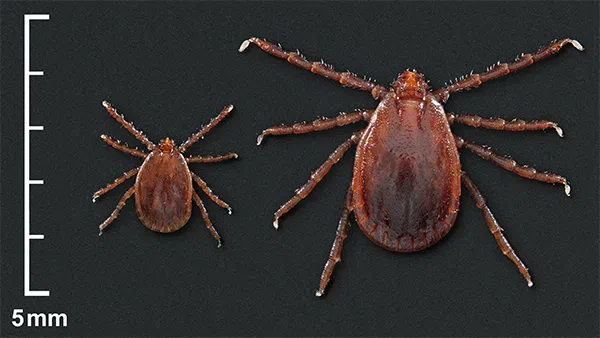
Asian longhorned tick isn’t in the KVOE listening area, but it’s relatively close.
The Kansas Department of Agriculture has confirmed the first known presence of the tick in a dog in Franklin County.
Asian longhorned tick was first noted in the United States in New Jersey in 2017 and has since been spreading west. Agriculture health officials are concerned because it can cause several diseases for livestock, like Theileria orientalis ikeda — which can cause anemia, anorexia, difficulty breathing and, in some cases, sudden death.
The Kansas State Veterinary Diagnostic Laboratory is urging ranchers to be vigilant for symptoms and also to be careful when importing cattle, especially from states where the parasite has been confirmed.
The tick can also be responsible for several illnesses affecting humans, including thrombocytopenia syndrome, a potentially fatal hemorrhagic fever; Bourbon virus and ehrlichiosis, which have symptoms ranging from fever to vomiting; and Japanese spotted fever, which is typically not life-threatening but can lead to severe complications like organ failure.
Click here for the Kansas State University’s information page. Ag producers with questions can call Kansas Veterinary Diagnostic Laboratory Associate Director Dr Greg Hanzlicek at 866-512-5650. Residents with questions about pet health can reach out to their veterinarians.
Asian longhorned tick precautions from Kansas Department of Agriculture
*Be aware of where ticks are found and using preventive measures when in grassy, brushy, or wooded areas.
Dress preventively by wearing long pants tucked into socks and shirt tucked into pants.
*Treat clothing and gear with permethrin.
*Use an EPA-approved repellent such as DEET, picaridin, or oil of lemon eucalyptus (OLE) when enjoying the outdoors or being in a tick habitat.
*After coming indoors, perform a thorough tick check, being sure to focus on the waistband, under the arms, in and around the ears, inside the belly button, back of knees, and in and around the hair.
*Check pets for ticks, especially around the tail, between the back legs, under the front legs, between the toes, in and around the ears, around the eyes, and under the collar.
*Shower soon after being in a tick habitat or engaging in outdoor activities. This will help remove any unattached ticks and identify any attached ticks.
*To remove attached ticks, use a pair of fine-tipped tweezers, grasp the tick near the skin, and apply gentle traction strait outwards until the tick is removed.
*Help prevent tick-borne diseases and tick infestations on pets by consulting with your veterinarian on use of a veterinary-approved flea and tick preventative.