


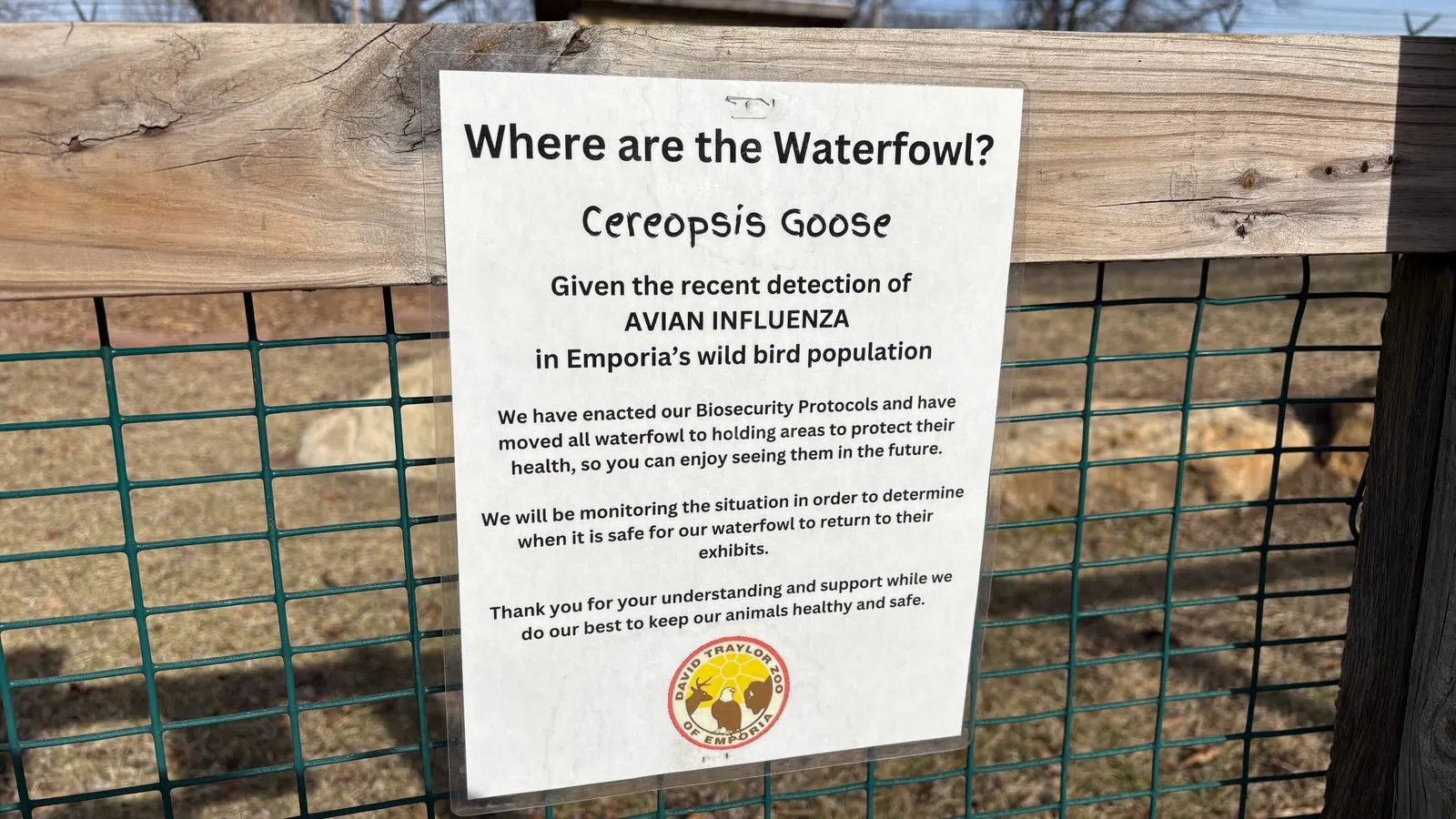
Avian influenza is still affecting operations at the David Traylor Zoo, but it’s not affecting any of the birds.
A month ago, the zoo moved its trumpeter swans, nene geese, Cape Barren goose, snow geese, redhead ducks and wood ducks to its off-exhibit area after increased activity for what’s officially called Highly Pathogenic Avian Influenza. Zoo Director Brenda Young doesn’t see the birds coming back to public view for a while.
Having said that, Young says the birds are doing well.
The Kansas Department of Agriculture never specifies locations where bird flu is under investigation, but it says there is a non-commercial backyard in Greenwood County that’s been under quarantine since Jan. 6. A similar operation in Wabaunsee County has been under quarantine since Dec. 19.
Bird flu is considered highly contagious and is usually spread by infected wild birds as they migrate. Poultry owners have been told to eliminate any possible exposure, including keeping poultry in enclosures where wild birds can’t enter, staying away from sick or dead wild birds and cleaning boots and other clothes after walking near ponds or lakes. Symptoms include coughing, sneezing, nasal discharge, lack of energy or appetite, lower water use, soft-shelled or misshapen eggs, lower egg production, lack of coordination and diarrhea. Poultry can also die suddenly even with no symptoms of bird flu.
Young says the zoo is following data from the Kansas Department of Agriculture and the US Department of Agriculture on active cases and will return birds to public view based on two factors: low flu numbers and cases far enough away from Emporia to not pose any health risks. Zoo veterinarian Dr Richard Mendoza will also be involved in the decision.
Click here for more information through the Kansas Department of Agriculture.