


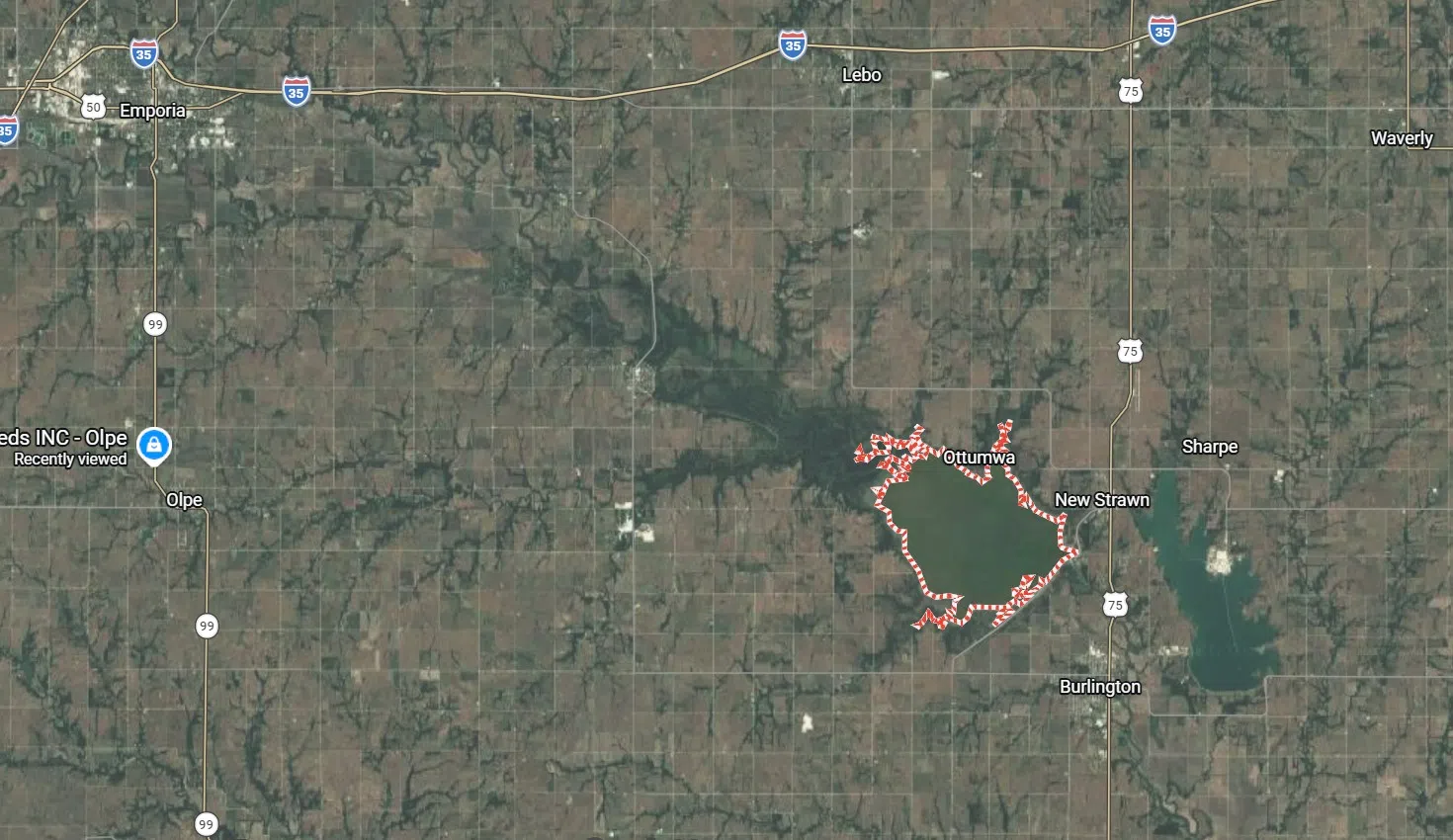
The potential for a new dredging method at John Redmond Reservoir is being considered as a way to ensure Wolf Creek’s operations for decades to come. It’s also being considered as a significant point in the state’s water plan.
Richard Rockel, the Kansas Water Office’s manager of public water supply systems, says a recent study — a collaborative effort through the Water Office, Oak Ridge National Laboratory, the University of Kansas and Bowersock Mills and Power Company — pinpoints the need to find water storage for Wolf Creek near Burlington. John Redmond has lost about 44 percent of its capacity since it was built in 1964, putting cooling supply at Wolf Creek in jeopardy by 2045 as the nuclear plant already generates over 20 percent of the state’s electricity. Besides resetting the lake’s water supply and ensuring long-term operations at Wolf Creek, one goal of any new dredging effort is to return the sediment flow to the way it once was decades ago.
Aquifer issues out west have been a driving force behind discussions to fully fund the State Water Plan well into the future, but so has been reservoir health at places like John Redmond.
It has been 10 years since the state dredged 3 million cubic yards of dirt from the reservoir at a cost of $20 million, or nearly $7 a cubic yard. Updated to 2025 prices, the cost would have been around $11 a yard — and the report says it could cost more than $13 million a year just to remove the annual sediment deposit of almost 750 acre-feet. Rockel says the 2016 project highlighted one thing: dredging is effective for a time. It’s just not cost-effective.
Rockel says land access becomes increasingly difficult with repeated dredging, which is one of the reasons why the report champions a process called hydrosuction — basically siphoning out the dirt. It’s an approach that hasn’t been used much in the United States, but Rockel says it has been effective in Central America. John Redmond has the infrastructure to make hydrosuction work at a significant cost savings, according to the report, but more study is needed and operating processes need to be more clearly defined.
Rockel also says the report has a federal component, especially when it comes to the power grid.
Work is also needed to coordinate with the US Army Corps of Engineers as conversations move forward. The Kansas Legislature, meanwhile, has set aside $1.5 million for projects at John Redmond and is encouraging work towards a federal cost-share project to limit the state’s bill.
KVOE News reached out to Evergy for its perspective on potential projects at John Redmond benefiting Wolf Creek. The utility deferred to the Water Office, saying the Water Office is the best entity to speak about any upcoming work. From the Water Office viewpoint, Rockel says Evergy has been engaged in ongoing conversations and there are mutual benefits to Evergy and the state if sediment can be removed from John Redmond.