


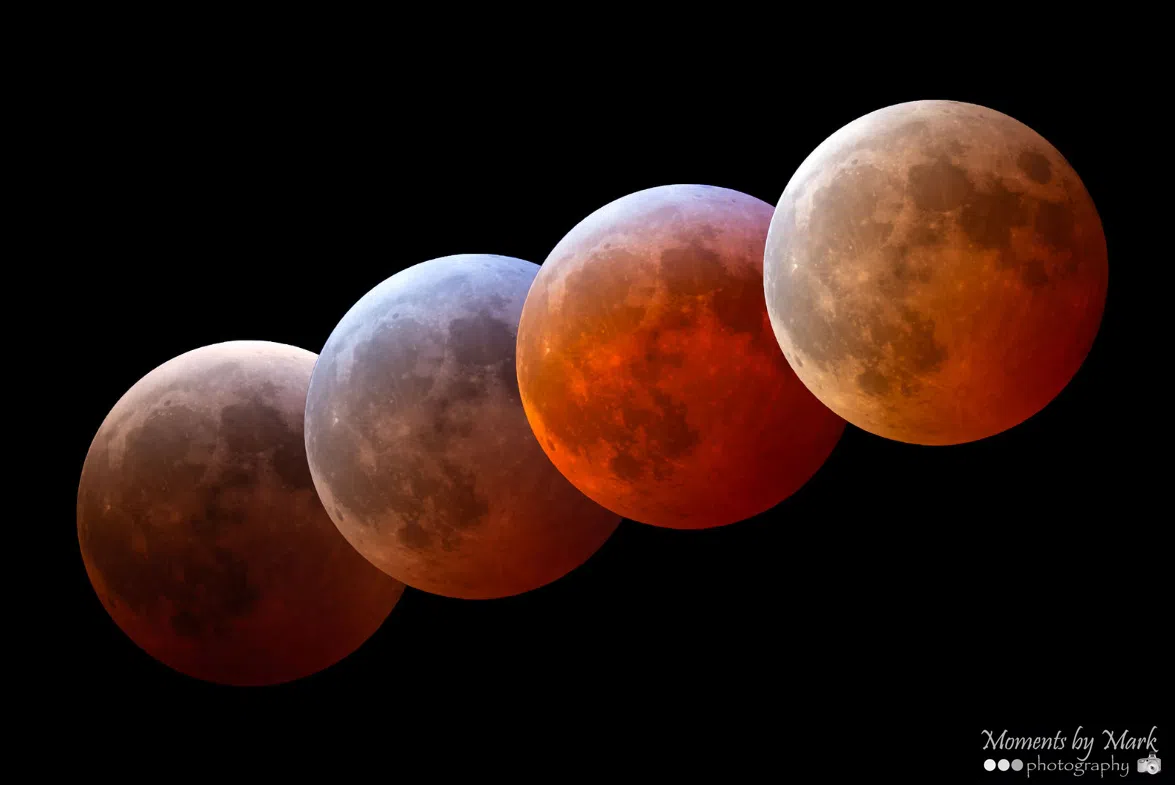
If the cloud deck parts Monday night and early Tuesday morning, you will see a full lunar eclipse.
Emporia State University doesn’t have a formal watch event on campus, but Peterson Planetarium Director Mark Brown says there are some preliminary and optional activities for his students early Tuesday. If you can see the eclipse, Brown suggests looking for certain features and characteristics.
The eclipse will actually begin around 2:44 am Tuesday with the start of the penumbral eclipse.
It will be over an hour — 3:50 am — before the partial eclipse begins.
Total eclipse is just after 5 am. Mid-eclipse will happen just after 5:30 pm. Totality ends just after 6 am, with moonset just before 7 am.
Underlying the eclipse is the name of this lunar cycle: the full blood worm moon.
Tuesday’s eclipse is the only total lunar eclipse that North America residents can see this year, but rain appears likely through the overnight period areawide. Residents who can’t see the eclipse can search for NASA Science Live or the NASA YouTube channel for live streaming.
The last total lunar eclipse took place almost a year ago — March 14, 2025.