


It shouldn’t surprise anyone that the war between the United States and Israel on one side and Iran on the other will likely cause gas prices to increase.
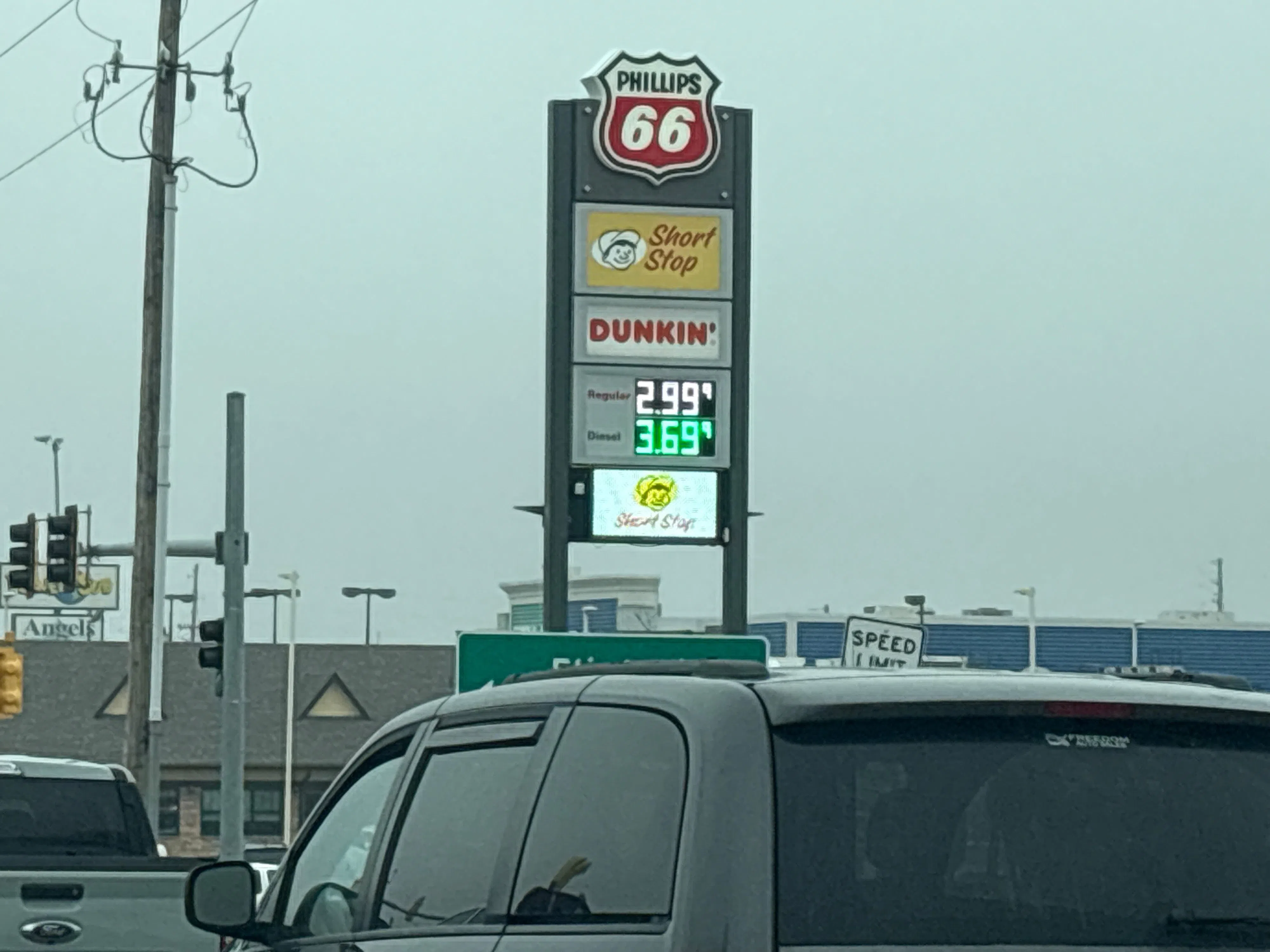
There are signs of that already. Gas prices were as high as $2.59 a gallon Monday morning. The top-end gas price as of midday Tuesday was $2.99.
Kansas AAA Manager of Public and Government Affairs Shawn Steward says the increases in gas and crude oil prices reflect a region-wide impact in the oil-rich Middle East as opposed to strictly direct commercial connections between the United States and Iran.
Brent crude was up around 10 percent over the weekend and went up another 6 percent Monday, moving that benchmark to $77 a barrel after a 5-percent increase last month as tensions intensified between the US and Iran. West Texas crude went up 9 percent over the weekend and is up over 4 percent Tuesday, now selling for over $75 a barrel. Concerns are that oil could go above $100 a barrel, regardless of the benchmark, if the war continues.
Iran says the Strait of Hormuz, a narrow 40-mile-wide strip of water between it and the United Arab Emirates, is closed — meaning roughly 20 percent of the world’s oil supply is on hold.
The war against Iran comes when more traditional, seasonal price increases are typically coming soon.
The length and severity of any price increase is to be determined, based on the length of the war against Iran and whether it overlaps part or all of the summer driving season.