

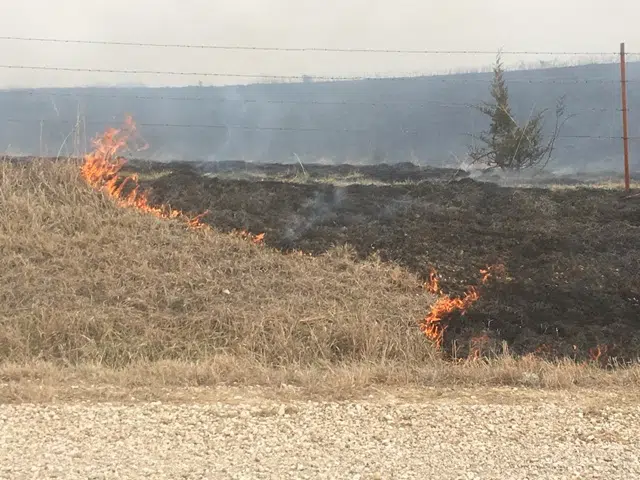
This week marks the end of the annual burn restrictions across the Flint Hills and, unofficially, the spring burn season.
There have been a lot of days that weren’t conducive to burns, but Environmental Protection Agency Region 7 Administrator Jim Macy tells KVOE News it has been a relatively average year. Stats from Kansas Flint Hills Smoke Management bear that out, with almost 1.9 million acres burned in the better than 20 counties tracked by the agency between March 8 and April 18.
Macy says there is a good working relationship at the agency level between EPA and the Kansas Department of Health and Environment to make sure landowners plan ahead for the season.
While March and April are typically the peak months for spring burns, Macy says landowners are getting encouraged to spread the burns out across the year because of the air quality impacts downstream.
Smoke from the Flint Hills routinely goes to Nebraska, Iowa and Missouri, but it can track further north and east to places like Wisconsin or Tennessee. Fire has been used as a control mechanism for invasive and woody plant species for years, and Macy says his goal is to “keep that tool in the toolbox” for landowners.
Macy says residents wanting more information about air quality can go online to airnow.gov.
Click here for Macy’s perspective about the relationship between fire, air quality and a strong economy.
Click here for the EPA Region 7 information page.