

The city of Emporia has spoken and there will be no high-impact data center developments in the community for at least a decade.
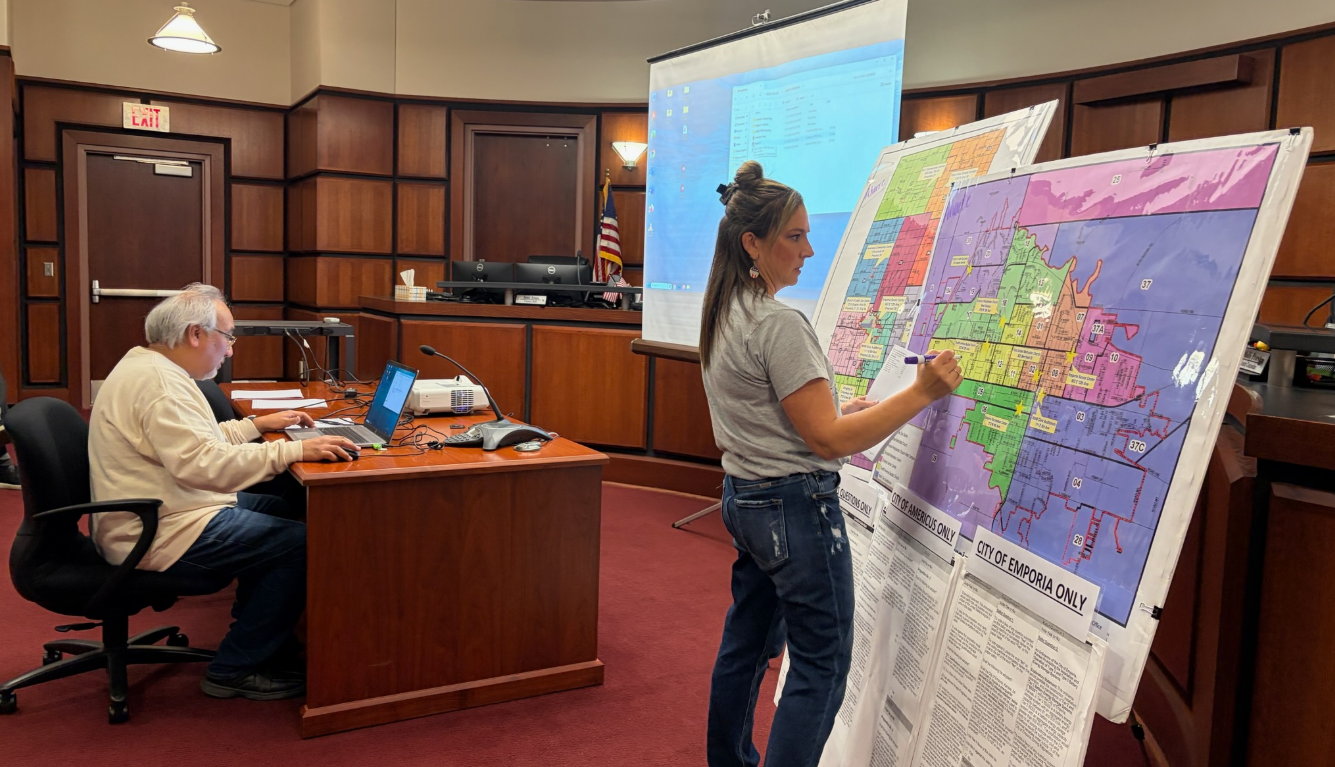
saw 4,346 votes for yes, meaning approval of the ban, and 2,891 votes for no in relation to the high-impact data center question, or question 2. Question 3, related to battery energy storage systems, saw 4,067 votes for yes and 3,117 votes for no.
The questions appeared on the ballot after a citizen’s petition circulated earlier this year, with Emporia Neighbors United leading the effort. Founder and spokesman for Neighbors United Jay Vehige stated in an interview with KVOE News Tuesday night that the results indicate “a new generation in politics is here.”
Leading the charge for voting no against the ban was Emporians For Progress. Spokesman Casey Woods noted throughout the past several months that there were concerns a yes vote on the ban could have significant negative implications for the community down the road, notably a reputation of “being closed for business.”
Woods stated Tuesday night that while they respect the community’s decision, it does not change the economic challenges Emporia is currently facing.
Woods also noted previously that there had been implications from outside entities that potential developments could be lost based on the outcome of the election. He told KVOE News he had some correspondence with such entities during election night and it was “not positive.”
The city of Emporia had already taken several steps to prepare for a potential data center development before the election, including enacting policies and approving certain zoning. City Manager Trey Cocking, like Woods, says the city respects the voters’ decision and commended the community for showing up as it did at the polls.
As for next steps, Cocking says that is still to be determined at this time.
An important note: there is still a legal case pending a final decision on the petition question, with Senior Judge Glen Braun yet to issue a ruling on whether or not the petition was legislative or administrative in nature. Should it be deemed administrative, the prevailing theory has been that it will most likely be null and void.
Cocking says there is no word as of yet as to when Braun will issue his ruling on the matter. Vehige, when asked, stated Emporia Neighbors United is very confident the ruling will go in their favor.
For Woods, he still sees some glaring issues that need to be addressed with the petition’s wording regardless of the final ruling from Judge Braun.
These were just two of the three Emporia-specific special questions on the ballot Tuesday night. Also up for vote was the question regarding a quarter-percent sales tax that would have served as the main funding mechanism for a new Emporia Recreation Center and updates to the Lee Beran Recreation Center.
Voters ultimately voted down the tax by an unofficial total of 3,874 to 3,333.
Executive director of the Emporia Recreation Center Amanda Gutierrez said that while the loss was discouraging, she was grateful for those who showed up to vote.
Even so, Gutierrez said she and her team will continue to push for more recreational opportunities in the future.
Adversely, Tuesday night’s election saw the passing of USD 251’s ballot questions 1 and 2.
Question one asked if voters in the USD 251 boundaries should approve a nearly $26 million bond for a new high school, while question two asked if voters should approve a better than $5 million bond for a new athletics complex near Americus.
KVOE caught up with superintendent of schools Bob Blair, who said he was grateful to the community members who showed up to vote in support of the two special questions, which he said will improve the district greatly.
Moving forward, Blair said the district’s work to make the project a beneficial one for all parties involved is just beginning.
In a close run for Kansas’ House District 60 seat, Republican Mark Schreiber won the race against Democrat Maddison Glover on Tuesday night– a relief, Schreiber said when KVOE caught up with him after the unofficial election results were released.
As a first-time candidate at just 27 years old, Glover said she’s proud of how close she got to taking the seat. With official results still pending, Glover said she’s hopeful she’ll make up the difference.
For Kansas House 76, Republican candidate Russel Stukey won the race with 1,907 votes.
As he heads into Congress, Stukey said voters can count on him to hold up his end of the campaign bargain to keep local municipalities in control of their own local laws.
In Lyon County, the race for the 13th District State Representative seat was close– Republican candidate Duane Droge won the seat by one vote against Democratic candidate Mark Remmert.
Lyon County’s unofficial voter turnout came to just under 55 percent, according to Lyon County Election Officer Amie Jones. Jones says it was a good night for the election office, a result she attributes to her election staff.
While the election is now complete, work is still ahead for election staff.
We have complete election night results available here.