

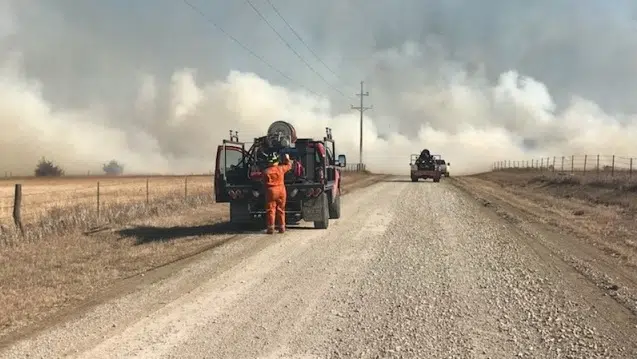
With the grass fire season set to pick up speed soon, the Kansas Department of Health and Environment will activate the Kansas smoke modeling tool this week.
The tool will go live Wednesday on the Flint Hills Smoke Management Plan’s website, ksfire.org. The website uses several computer models which predict possible smoke impacts downwind. Prescribed burns send a lot of particulate matter and other items into the air which can form ozone and cause a variety of health problems, especially for children, the elderly and people with respiratory or heart issues. Depending on wind conditions, smoke from the Flint Hills can travel north to Minnesota or east to Tennessee.
March and April are the peak months for Flint Hills burns, which help to control invasive plant species, offer better forage conditions for cattle and reduce the risk of uncontrolled burns becoming massive wildfires.