


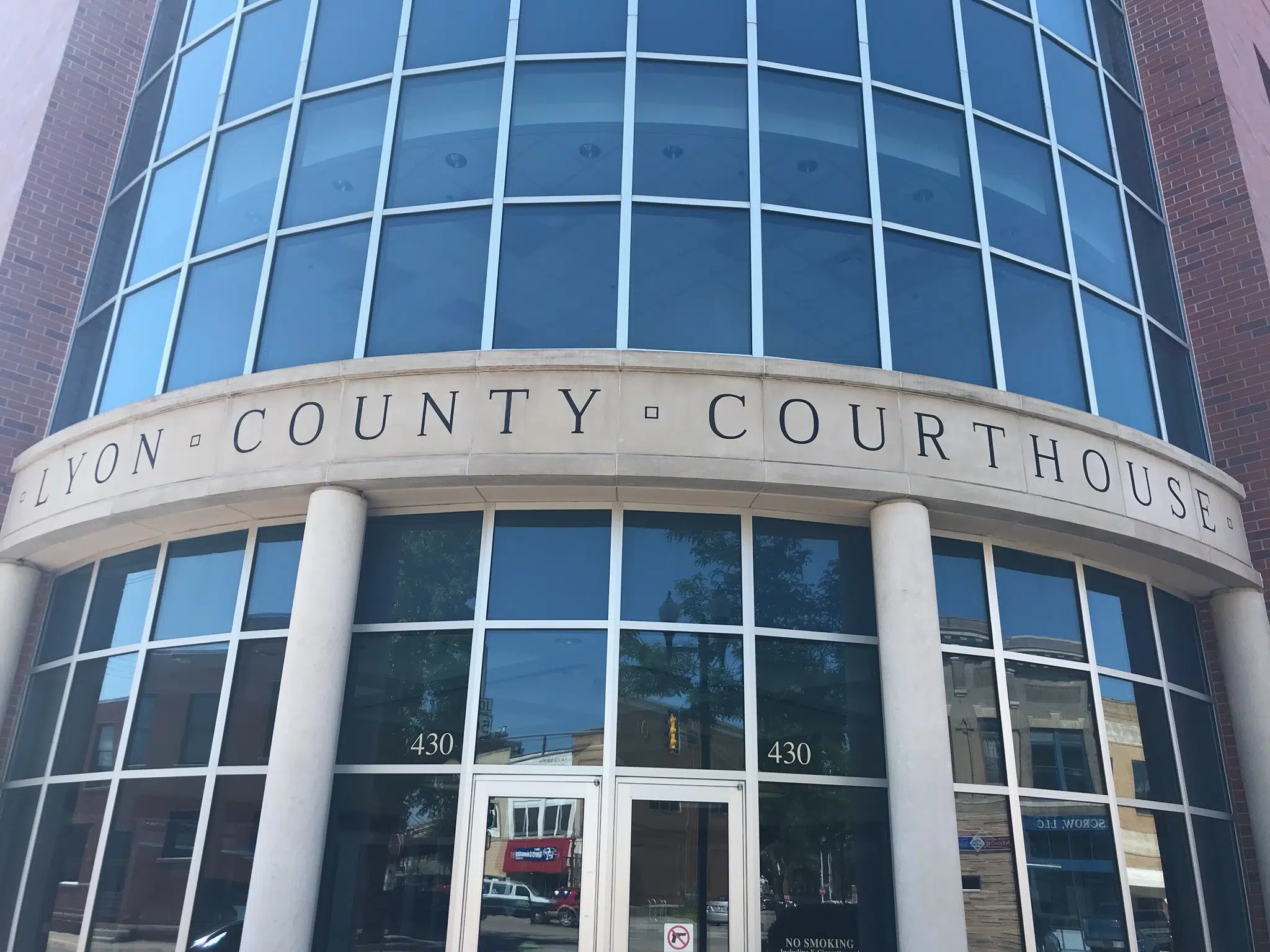
Testimony will continue Tuesday as Emporian Devawn Mitchell seeks to overturn his felony murder conviction in the 2021 traffic death of a fellow Emporian.
A bench trial in Mitchell’s latest appeal began Monday in Lyon County District Court. The current appeal from Mitchell’s defense team involves complaints of ineffective counsel, both from trial attorney Rick Meier and appellate attorney Kurt Kerns. Mitchell’s attorney, Bryan Cox, put Kerns on the stand first and asked why Kerns didn’t pursue a competency option. Kerns said Mitchell would have likely gone to the state’s treatment facility in Larned, only to go back into the trial process had a competency evaluation been approved. When asked why he didn’t raise the validity of potential issues with Mitchell’s decision to waive his rights to a jury trial, Kerns says he didn’t consider that option after consulting with Mitchell and reading Judge Lee Fowler’s statement on the case.
Meier took a different approach during the original trial, saying he wanted to focus on Mitchell’s possible culpable mental state — connected to whether unlawful acts were knowingly, intentionally or recklessly done. Like Kerns, Meier says he felt Mitchell was competent — mentioning later in his testimony he didn’t change his mind until certain statements by Mitchell at the end of the original trial. For that report, Meier said he went with CrossWinds Counseling and Wellness for an evaluation, instead of forensic and clinical psychologist Jarrod Steffan, because CrossWinds has traditionally handled similar work in past Lyon County cases and Mitchell’s past consultations at CrossWinds for mental health concerns could make it easier to access records and other related information.
That decision touched off a lengthy discussion about Meier’s moves during the trial, especially given a statement Mitchell could be competent for trial if he was given adequate “coaching and support.” Meier says he did, based on the number of meetings and his advice throughout the trial process. Cox also questioned Meier about his decision to rely on a report from Brian Muensch, a licensed social worker, instead of a psychologist like Steffan. Meier reiterated his comments about CrossWinds’ traditional role and its familiarity with Mitchell’s situation.
Also testifying Monday was psychiatrist Steven Peterson, who said a meeting with Mitchell this past January started well, but Mitchell became increasingly paranoid as the discussion continued. Peterson said Mitchell had classic signs of schizophrenia, saying involuntary brain changes make medication necessary with that condition — and adding Mitchell had been treated irregularly since 2016. Peterson said he felt Mitchell was not treated adequately due to his symptoms and did not feel Mitchell would have been competent to stand trial, although he relied on statements from Mitchell and Mitchell’s mother as opposed to state records for his result.
Other testimony Monday included comments from Mitchell’s mother, who said Mitchell was not on any medications at the time of the fatal wreck. She said Mitchell had voices in his head telling him to hurt himself and he was “worthless.”
Mitchell was convicted in 2022 after leading a high-speed chase in Emporia that ended with the death of Steve Henry near Sixth and Chestnut. Law enforcement broke off the pursuit shortly before the fatal crash. Mitchell was sentenced to 50 years in prison for felony murder, aggravated assault on law enforcement and flee and elude. A previous appeal was denied by the Kansas Supreme Court.
Along with overseeing the original trial, Fowler is presiding over this appeal. Trial could end Wednesday. Mitchell is set to take the stand Tuesday.