

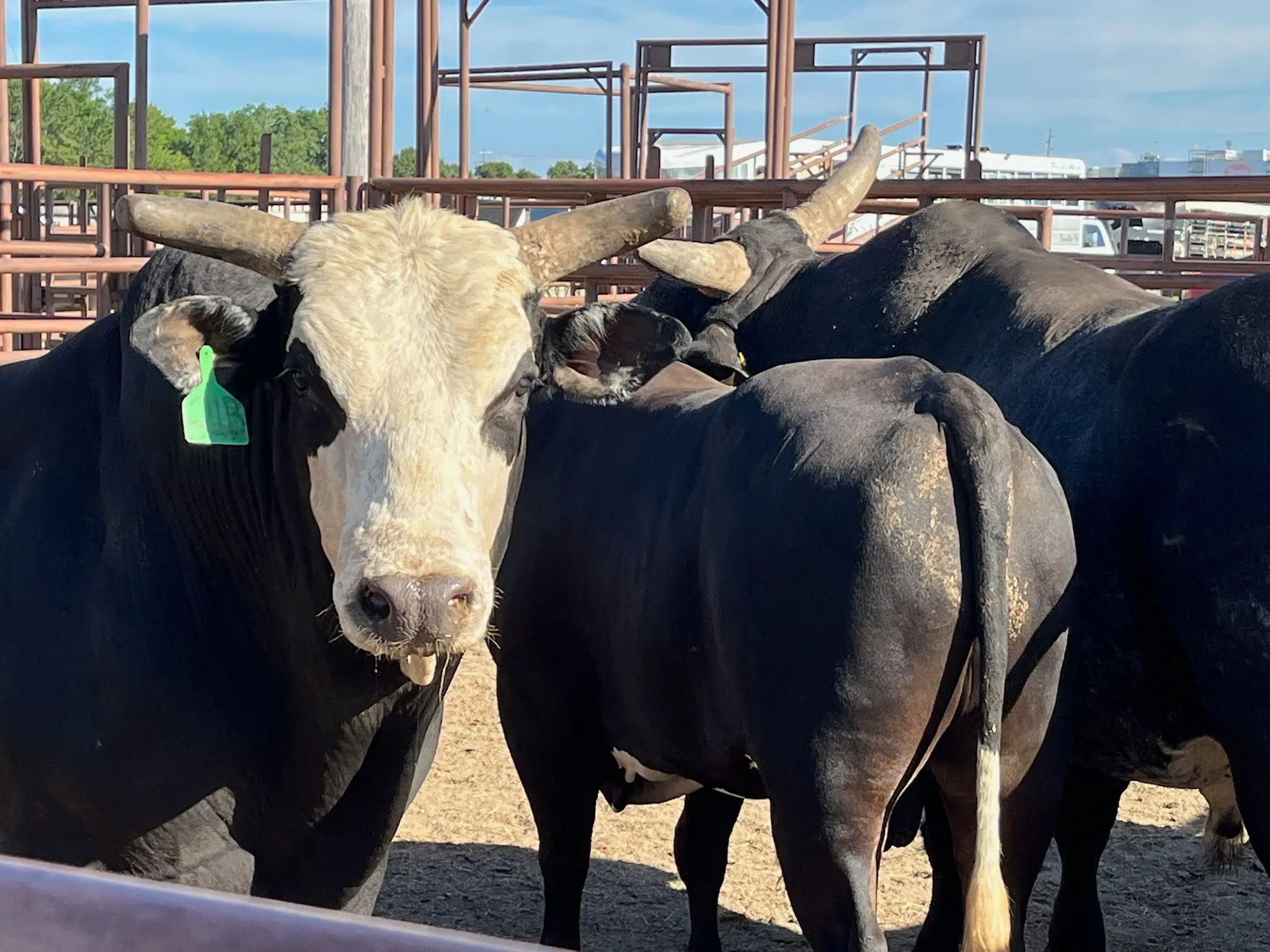
President Trump’s idea of bringing Argentinian beef to the United States is not sitting well with ranchers, livestock organizations or beef-related businesses.
This past weekend, the President said it’s considering a purchase of Argentinian beef as a way to reduce retail prices across the United States. Keith Cattle Company owner Brian Keith and Emporia Livestock Sales owner Brody Peak had the same general sentiment when asked about that idea Monday:
Peak says the quality of American beef can’t be matched.
Peak tells KVOE News such a move has the potential for roiling the US cattle industry.
Another possible impact could be American ranchers selling fat cattle cheaper than normal and work on its own to reduce input costs, which is difficult to do. Keith, meanwhile, says the government’s focus should be on lowering costs rather than raising import numbers — and not just for beef producers.
Keith says supply issues have been a concern the last two years due to a shortage of feed and drought. With concerns about Argentinian beef numbers — and quality — Keith hopes American consumers stick with American beef.
Kansas Livestock Association Vice President for Communication Scarlett Madinger says KLA leadership was extremely disappointed this is even an option, even with higher prices in the meat aisle reflecting higher input costs and smaller herd numbers.
Madinger tells KVOE News imported beef quality is a concern, especially with Argentinian beef.
Several livestock organizations at the national level agree with Peak and Keith instead of the President. The National Cattlemen’s Beef Association says importing beef from Argentina “creates chaos at a critical time of the year for American cattle producers while doing nothing to lower grocery store prices.” R-CALF USA says a longstanding invitation of more imports from Argentina, Brazil and Namibia did not work as intended to offer consumers more choices at lower prices.
KVOE listeners can get more information about agriculture-related matters through reports from Brownfield Ag News. Reports air around 6:30 am, 12:30 pm and 5:30 pm. Click here for the latest Brownfield headlines accessible through KVOE.com.
Statement from the National Cattlemen’s Beef Association CEO Colin Woodall
“NCBA’s family farmers and ranchers have numerous concerns with importing more Argentinian beef to lower prices for consumers. This plan only creates chaos at a critical time of the year for American cattle producers, while doing nothing to lower grocery store prices.
“Additionally, Argentina has a deeply unbalanced trade relationship with the U.S. In the past five years Argentina has sold more than $801 million of beef into the U.S. market. By comparison, the U.S. has sold just over $7 million worth of American beef to Argentina. Argentina also has a history of foot-and-mouth disease, which if brought to the United States, could decimate our domestic livestock production.”
Statement from R-CALF USA CEO Bill Bullard
“We acknowledge that beef prices are higher than what a competitive market would predict. Decades of failure to manage excessive imports and address unprecedented industry concentration have caused beef prices to disproportionately increase more than cattle prices.
“As beef prices increased, our cattle herd shrank because increasing volumes of imports displaced the need for domestic cattle. Then along came a drought that accelerated the ongoing decline of our domestic herd, converting our industry’s chronic problem into today’s acute problem.
“Global packers are importing beef from about 20 different countries, including Argentina, and because we do not have a mandatory country-of-origin labeling law for beef, the global packers do not need to reduce the price of imported product compared to domestic product. This negates any theoretical benefit of using more imports to drive down domestic beef prices.
“The president should immediately require mandatory country-of-origin labels on beef so American consumers can choose to help rebuild and expand our nation’s contracted cattle herd.
“Market participants know that increased imports from Argentina will reduce demand for domestic cattle, and that’s why cattle markets have responded negatively to the president’s plan. And there couldn’t be a worse time for this to happen, as many producers are getting ready to sell this year’s production, meaning they will receive less for their cattle, and that will threaten their ability to remain economically viable, particularly as they face increased input costs in their operations.
“For decades the government has been inviting more imports from countries such as Brazil, Argentina and Namibia, claiming these increased imports would provide consumers more choices and lower consumer beef prices. This did not work and cannot work in a market where these imports are not differentiated with a country-of-origin label and where competitive market forces have been replaced with corporate control by concentrated global beef packers and concentrated beef retailers.
“There is a wave of beef price-fixing cases working their way through the court system. President Trump should direct his antitrust enforcers to determine the extent to which the alleged unlawful price fixing has contributed to today’s higher beef prices.
“We urge the president to manage imports, restore mandatory country-of-origin labeling for beef, and put an end to the monopolistic control that packers and retailers have over our beef supply chain. Doing so will incentivize America’s ranchers to rebuild and expand the U.S. herd to meet our national security needs and ensure that consumer beef prices are determined by competitive market forces.”
Statement from Kansas Livestock Association
“President Donald Trump made a statement Sunday referencing the possibility of the U.S. importing Argentinian beef as a way to “bring beef prices down.” This would harm U.S. producers and interfere with the free market. KLA is working alongside NCBA to ensure the administration understands the industry’s opposition to government intervention in the marketplace and the lack of any consumer-facing benefit stemming from it.
“Government intervention will have the opposite effect of the administration’s desire to grow the beef herd. Faced with the possibility of artificial government suppression of beef prices, ranchers will decide to liquidate rather than retain heifers, further shrinking an already record-small cattle herd.
“It also is being made clear the economic damage caused to producers when the market reacts to broad statements from the administration about beef prices. The Trump administration needs to let markets work. Vague statements about lowering beef prices only add volatility to cattle markets, creating significant price risks for cattle producers
“Beef prices reflect strong consumer demand for the high-quality, nutritious steaks, roasts and ground beef provided by U.S. producers. They also reflect the higher input costs faced by ranchers and cattle feeders, as well as the reduced herd numbers due to the recent multi-year drought in cattle country. When factoring in the nutritional benefits of beef, consumers get significant value from their beef purchases.
“KLA and NCBA are encouraging members to send a message directly to their legislators in Washington, DC, urging them to push back on this plan. Through this link, members can send a pre-written message to their legislator telling them the federal government should let the market work and not attempt to influence beef prices by importing beef from Argentina. Members will have the option to send the message as is or to personalize it.
“Both organizations will continue to be actively engaged on this issue.”