

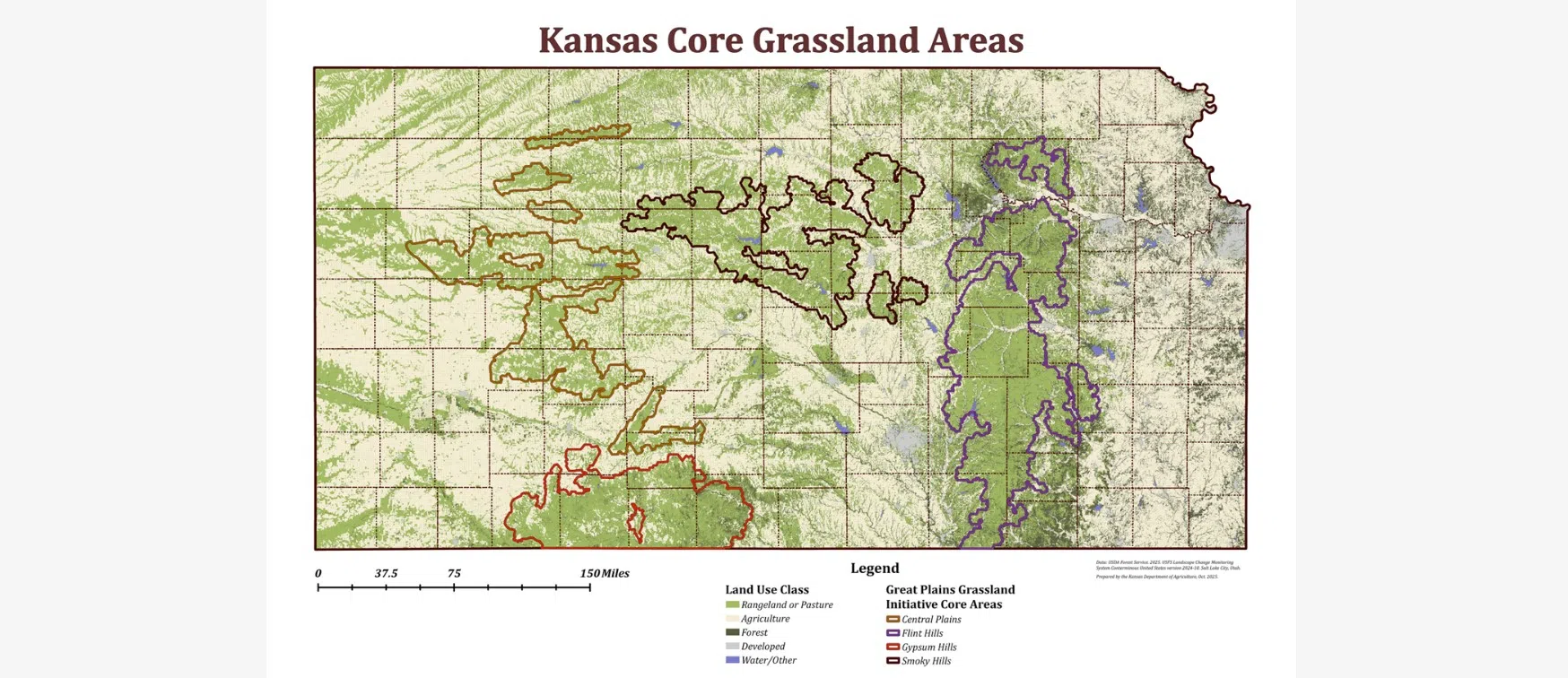
The opening line in the Kansas Department of Agriculture’s Kansas Grasslands Issue Brief reads as follows: “Grasslands are a critically important, yet often overlooked, natural resource in Kansas.”
And according to the report published last month, the grasslands of Kansas are disappearing.
Grasslands currently comprise almost 30 percent of state acreage, and the nearly 16 million acres of grassland offer numerous benefits to the residents of Kansas and elsewhere — things like automatic forage for Kansas beef, protecting water quality while reducing erosion, supporting pollinators, offering wildlife habitat and storing carbon in deep-root systems. Increasingly, though, grasslands are being overtaken by trees, brush and non-native grasses at a rate of hundreds of thousands of acres per year, according to the report.
On KVOE’s Morning Show on Tuesday, Kansas Secretary of Agriculture Mike Beam says this may not seem like a big deal, but it is — and he used cattle impacts as a case in point.
With cattle specifically, the report says the reduction in grassland acres could lead to a smaller beef herd, translating to less beef cattle industry revenue and higher costs in grocery stores.
Beam says the transition from grassland to woodland, especially when Eastern Red Cedar is concerned, creates a significant wildfire hazard. Tress also put strains on water supplies that grasslands don’t.
Beam demurred on whether prescribed burn habits in Kansas have changed due to air quality concerns in states north and east of Kansas, but he encourages fire department officials to realize the importance of properly-handled controlled burns for the state ecosystem.
0:34 – 0859-Beam Fire and firefighters
Besides lower profitability and fewer commercial opportunities for ranchers, increased wildfire risks, loss of plants and wildlife, declines in water quality and quantity and long-term carbon losses, the report also says disappearing grasslands could also lead to increases in seasonal allergies and so-called vector-borne illnesses from mosquitoes and ticks like Lyme disease or West Nile virus in humans and theileria in cattle.
Beam says there needs to be a lot of education — on a variety of related topics — to make sure grasslands don’t keep disappearing.
Beam says the Department of Agriculture is working with what are called non-governmental organizations and other state departments to help conserve grasses and limit woodland spread.
The report highlights the need for a statewide media campaign highlighting the benefits of a viable grasslands ecosystem. The report also highlights the need to help landowners control invasive woody species with financial assistance, as well as education about hunting potential and overall economic impacts to state agriculture.