

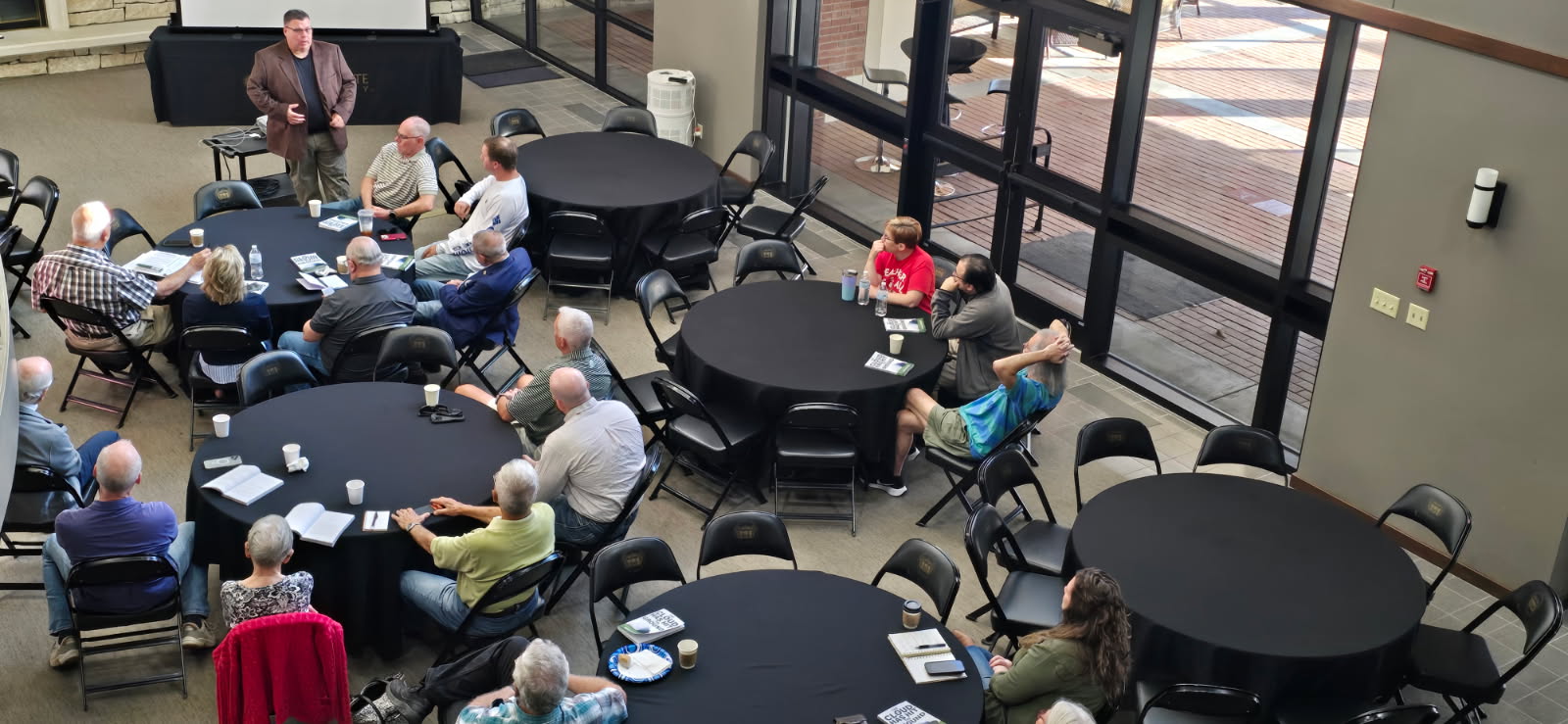
Following his presentation during an Eggs and Issues forum at the Sauder Alumni Center Saturday morning, author Heath Jeppson sat down with KVOE News, where we asked a simple question, one that many have been asking others in recent months: “Are you pro or anti data center?”
Jeppson’s response is that he is neither for nor against data centers, saying he does see the merits, but also the concerns surrounding the issue.
Rather than being in favor of or opposed to the structure itself, Jeppson stated he is anti “BS” across the board when it comes to the data center issue, emphasizing the importance for individuals, no matter their stance on the matter, to be “intellectually honest” with themselves when it comes to their stance.
Jeppson adds that in some cases individuals will attempt to disguise their concerns “as something else” other than their core concerns, which can often begin to breed a sense of tribalism within a community, a common human occurrence he says “we need to stop,” noting it is highly unproductive in nature.
Jeppson would also speak to the perceived dangers of generalization, advising all in attendance, regardless of their stances on the matter, to avoid making “absolute statements” about any matter.
Speaking to an issue more directly tied to the local community, Jeppson discussed efforts to ban or prohibit specific developments, alluding to the petition questions on the November 3 ballot seeking to ban high-impact data centers and battery energy storage systems. In his opinion, Jeppson believes it is not a good practice to attempt to “ban an industry outright,” saying it can send a dangerous message to other industries as well.
Jeppson would add that it is his opinion that rather than seeking to ban a development or industry, a community should want to see the details of an agreement, or “deal” and weigh it on its own merits before making a decision. It is important to note that question two on the ballot does not seek to ban data centers as a whole, but rather only high-impact data centers.
Also speaking to local issues, Jeppson covered the topic of confidentiality in business dealings, something that has drawn heavy criticism towards local leadership from a portion of the population who claim the City of Emporia was working in secret and hiding details from the community before announcing plans for the Flint Hills Digital Campus Center back in June. City leadership has denied this and stated that confidentiality is a significant part of any business dealing, as you do not want to risk jeopardizing a land deal, for example, which could lead to litigation.
Jeppson, Saturday, noted he believes there should be a level of confidentiality in certain dealings; however, a complete deal should not be reached or finalized in the same manner.
Following that statement, KVOE News asked Jeppson if it is his belief that a community should, at the least, let a development get to this stage; he stated yes, but it needs to be aware of what is a good deal or a bad deal. This led KVOE to ask what would constitute a good or bad deal.
Jeppson stated, “Some of this is subjective versus objective.”
Another level to the debate, locally and nationally, has been the dispute over information between sides, with both sides at times calling into question the factual nature of information shared either for or against the issue. Jeppson told KVOE News that information, more specifically where individuals are getting theirs from, is one of his greatest concerns surrounding the entire matter.
Jeppson says when it comes to these disputes of information, “Ground truth facts” are the best resource for any argument.
In addition to being an accomplished author, whose works include The Death of a BANANA Republic, The Cloud Has Hit the Ground and the novel Dream State, Jeppson is a Marine Corps veteran and expert in cybersecurity whose career has included working with FEMA, the USDA and the U.S. Air Force.